INTOSAI Working Group on Follow-Up Audit Meeting
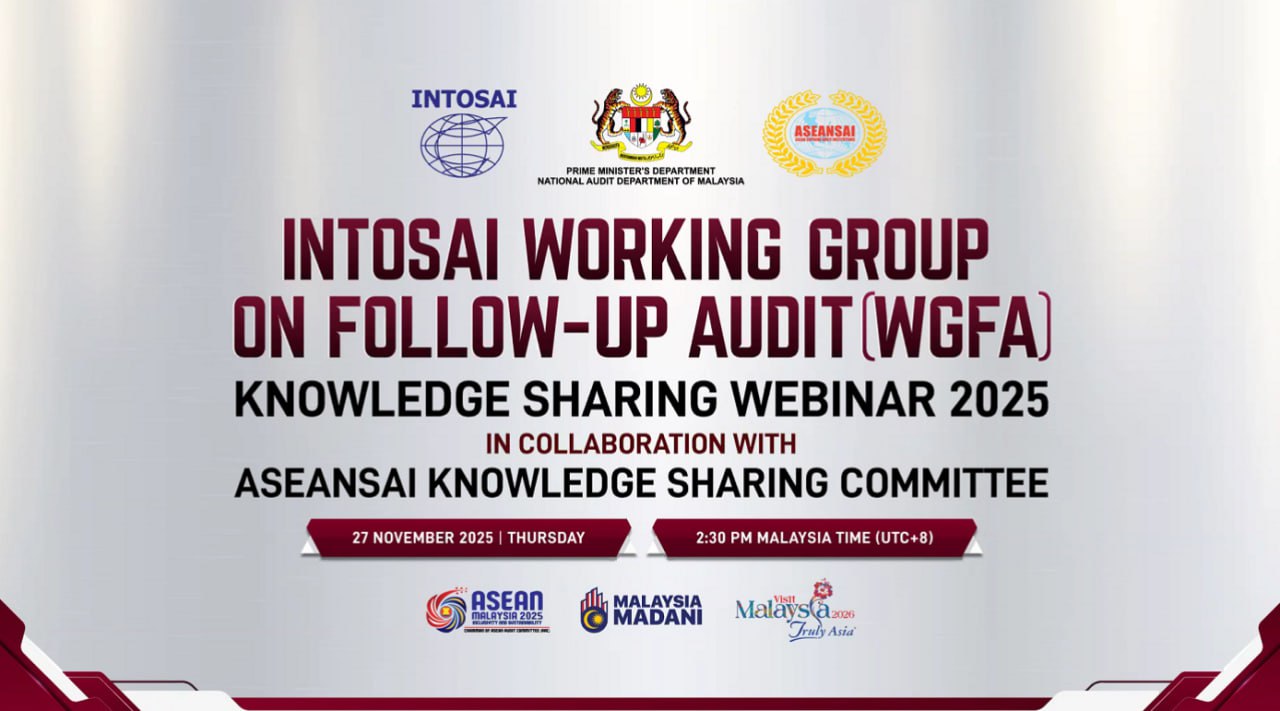
On 27 November 2025, the INTOSAI Working Group on Follow-Up Audit (WGFA) held an online meeting organized by the National Audit Office of Malaysia and the ASEANSAI Knowledge Sharing Committee (ASEANSAI KSC).
The event brought together 365 participants from 44 Supreme Audit Institutions (SAIs).
In her opening remarks, Auditor General of Malaysia Ms. Wan Suraya Wan Mohd Radzi emphasized that the webinar was not merely another knowledge-sharing session but a strategic platform for discussing the key challenges SAIs face in implementing effective follow-up audit mechanisms. She noted that the main outcome of the Group’s work in 2025–2028 will be the development of the Follow-Up Audit Methodological Guide, a core document aimed at ensuring a harmonized practice for monitoring the implementation of audit recommendations, engaging with public authorities, and assessing the impact of audits.
Mr. Adriano Juras, Project Manager at the INTOSAI Development Initiative (IDI), presented the concept of the audit impact value chain, which explains how audit results (findings, conclusions, recommendations) translate into managerial changes (outcomes) and broader societal impact. He underlined that systematic follow-up is essential for improving public sector governance and advancing progress on the Sustainable Development Goals. Mr. Juras also highlighted the need to strengthen the methodology for follow-up audit. A dedicated thematic guidance document will be published by IDI in 2026.
Representatives of SAIs of Kazakhstan, Kenya, Oman, Thailand, and Tunisia shared their national practices, noting a common trend toward increasing automation of follow-up processes. Typical challenges across countries include delays in implementing recommendations, incomplete or late reporting from audited entities, and the lack of enforceable mechanisms to ensure compliance. Participants also stressed that improving the effectiveness of follow-up audit requires a clear classification of recommendations, realistic implementation timelines, advanced digital monitoring tools, and a strong link between follow-up results and the planning of future audits.