Second Annual Meeting of the INTOSAI Working Group on Follow-up Audit
On August 17-18 2026, the Second Annual Meeting of the INTOSAI Working Group on Follow-up Audit (WGFA) was held in Kolkata, Republic of India. The Working Group is chaired by SAI Malaysia; the meeting was hosted by the Supreme Audit Institution of India. It brought together representatives of Egypt (INTOSAI Chair), Gambia, India, Iran, Malaysia, Thailand, Uganda and INTOSAI Development Initiative (IDI).
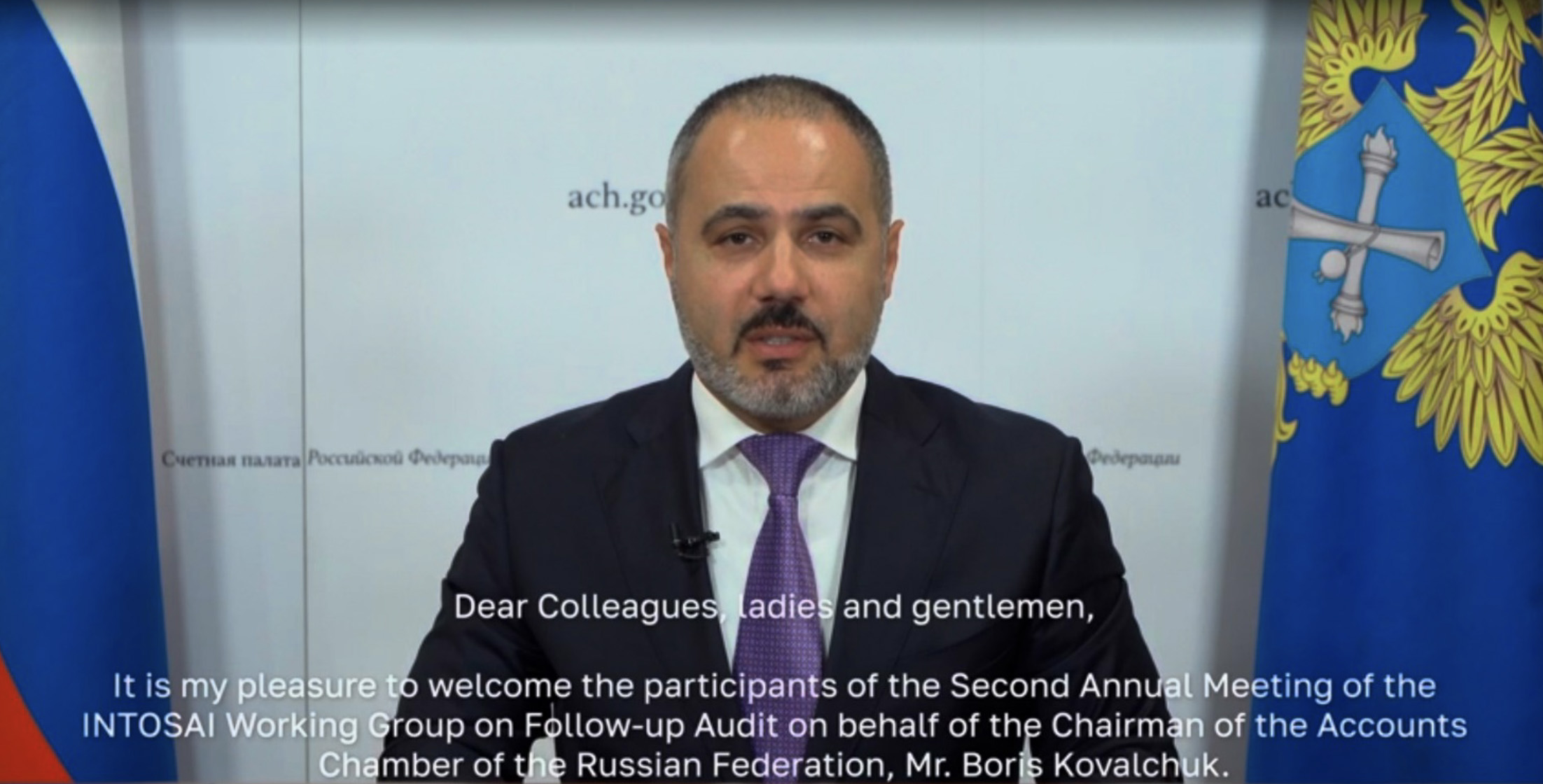
On behalf of Mr Boris Kovalchuk, Chairman of the Accounts Chamber of the Russian Federation, the participants were welcomed by Mr Igit Ignatiev, Deputy Head of Office of the Accounts Chamber of the Russian Federation. He thanked the Working Group Secretariat and its Chair, the Auditor General of Malaysia, for a year of systematic work, highlighting in particular the joint preparation of the draft Compendium of Good Practices on Follow-up Audit, and expressed gratitude to SAI India and the Comptroller and Auditor General of India for hosting the meeting.
Mr Ignatiev stressed that follow-up audit is becoming central to international audit practice: an audit ends not with the publication of a report, but with the changes that follow it. This is the essence of INTOSAI-P 12 – the role and value of a supreme audit institution are defined by its real impact on public governance and citizens’ lives, while a recommendation that is not implemented creates no value. Accordingly, an increasing number of SAIs assess their own performance not by the number of audits conducted, but by the share of recommendations implemented and the measurable economic effect achieved.
This matters most in public procurement, where budgets are large and the risks of abuse are high: identifying a single violation does not solve the problem, since the same errors may recur in the next procurement. A sustainable result requires continuous oversight, and it is follow-up audit that shows whether procedures, regulation and the day-to-day practice of the contracting authority have actually changed.
In support of this, Mr Ignatiev cited the 2025 results of the Accounts Chamber of the Russian Federation: more than four and a half thousand violations and deficiencies were identified, involving over one and a half trillion roubles; 1,027 recommendations were issued to audited entities, and 554 proposals were implemented, including recommendations from previous years. The economic effect of the Accounts Chamber’s work amounted to 653 billion roubles – 4.4 times more than a year earlier. The result is produced not by the audit itself, but by carrying its proposals through to implementation, which makes follow-up an integral part of the audit cycle.
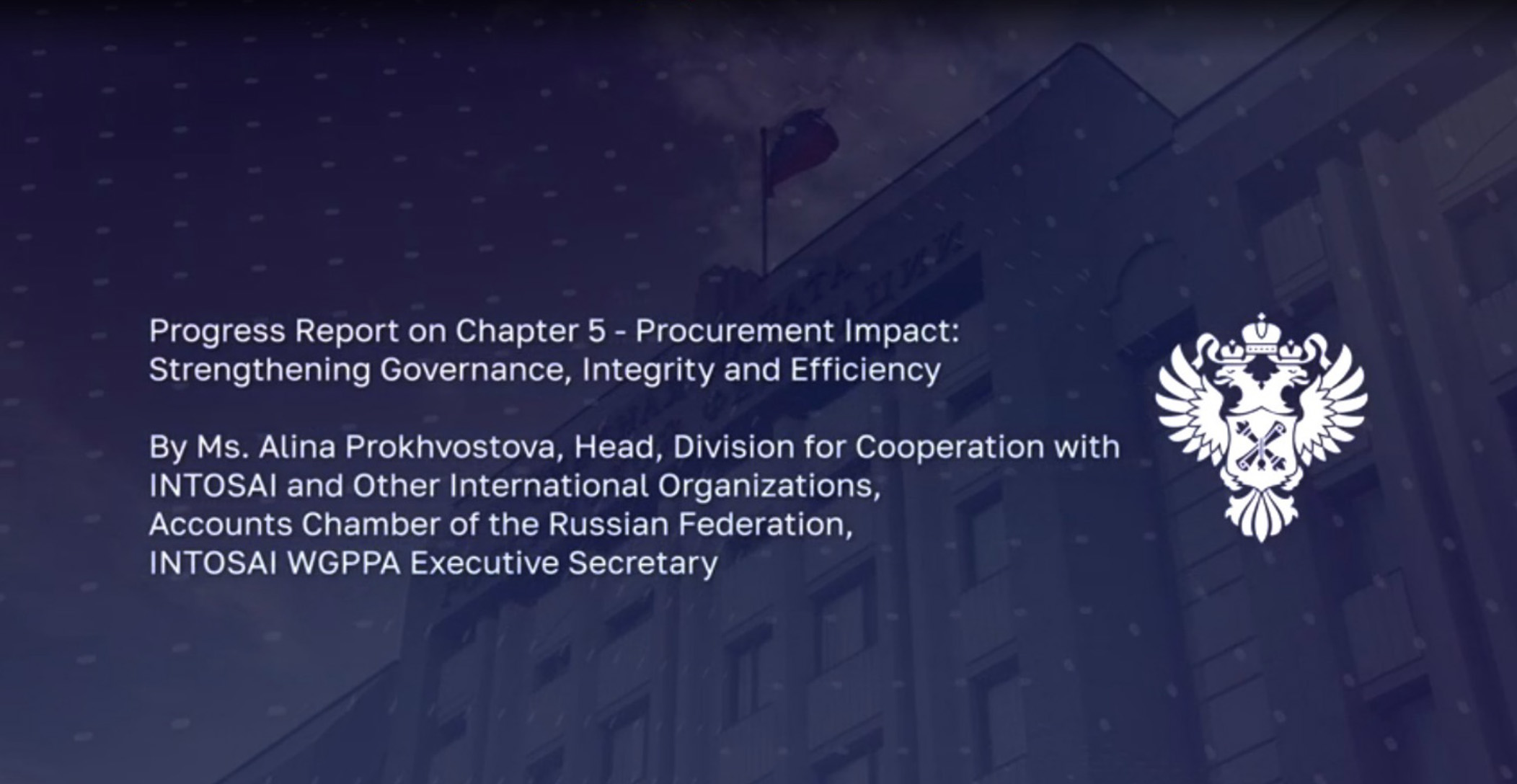
Ms Alina Prokhvostova, Head of the Division for Cooperation with INTOSAI and other International Organizations of the Accounts Chamber of the Russian Federation and Executive Secretary of the INTOSAI Working Group on Public Procurement Audit, reported on the progress of Chapter 5 of the Compendium – Procurement Impact of Follow-up Audit. A first full draft of about twenty pages has been completed, covering all five sections of the compendium framework, together with a companion product – the Procurement Impact Indicator Matrix, which may be useful beyond the chapter itself.
The chapter is built on a risk-based approach: a follow-up audit in procurement succeeds when the possibility of the failure has been removed, not merely when the individual instance has been repaired. This follows the requirements of ISSAIs, under which recommendations must address causes rather than symptoms.
The methodological basis is INTOSAI GUID 5280, developed by the Working Group on Public Procurement Audit: the chapter uses its map of integrity risks across the procurement cycle, its criteria groups (competition, cost containment, supplier management, internal systems, procurement management) and the Procurement Performance Model with its national, organisational and project levels. Above these sit ISSAIs and INTOSAI-Ps’, complemented by the UNCITRAL Model Law, the OECD Recommendation and the MAPS and PIMA methodologies, which provide independent baselines for assessing change.
Key findings presented include the need for honest and visible attribution, stated on the face of every impact claim at one of three levels (direct, contributory, enabling); the caution that a lower price is not in itself value for money, so every reported saving must be tested against delivery, quality and timeliness; and the risk of treating the implementation rate as a target, which encourages easy recommendations and avoidance of high-risk areas. The proposed remedy is to rank recommendations by expected economic effect and risk reduction at the moment they are issued, and to weight the implementation rate accordingly.
The indicator matrix comprises around sixty indicators across eight domains: financial results, process efficiency, competition, transparency and data, integrity and control, delivery outcomes, systemic change, and the performance of the follow-up process itself. A minimum set of ten indicators has been defined for institutions starting out or working with limited data. Each indicator is accompanied by a definition, a unit, a data source, a maximum attribution level and caution notes, and requires a baseline drawn from the same entity and the same procurement category.